The Bathroom Fan That Never Sleeps

November 2, 2026 | Ventilation

A bathroom exhaust fan that runs around the clock quietly pushes your heated or cooled air outdoors, and you pay to replace every cubic foot of it. I find bathroom fans running constantly in a surprising number of homes. At a recent inspection, three bathroom fans were running when I arrived, and nobody in the house had noticed. When I told the homeowners that three typical fans together could exhaust roughly the full volume of air inside their home in about an hour, they were shocked. Most people think of a bathroom fan as a small, harmless appliance. Left on all day, it is anything but. This post explains what is actually happening when those fans run nonstop, what it costs, the less obvious risks it creates, and the simple fixes that solve it. The math: a whole house of air, every hour Three fans rated at 100 cubic feet … Continued
Read More

Understanding Repaired Foundation Walls: What Do Those Vertical Patches Mean?

November 2, 2026 | Buyer Inspections

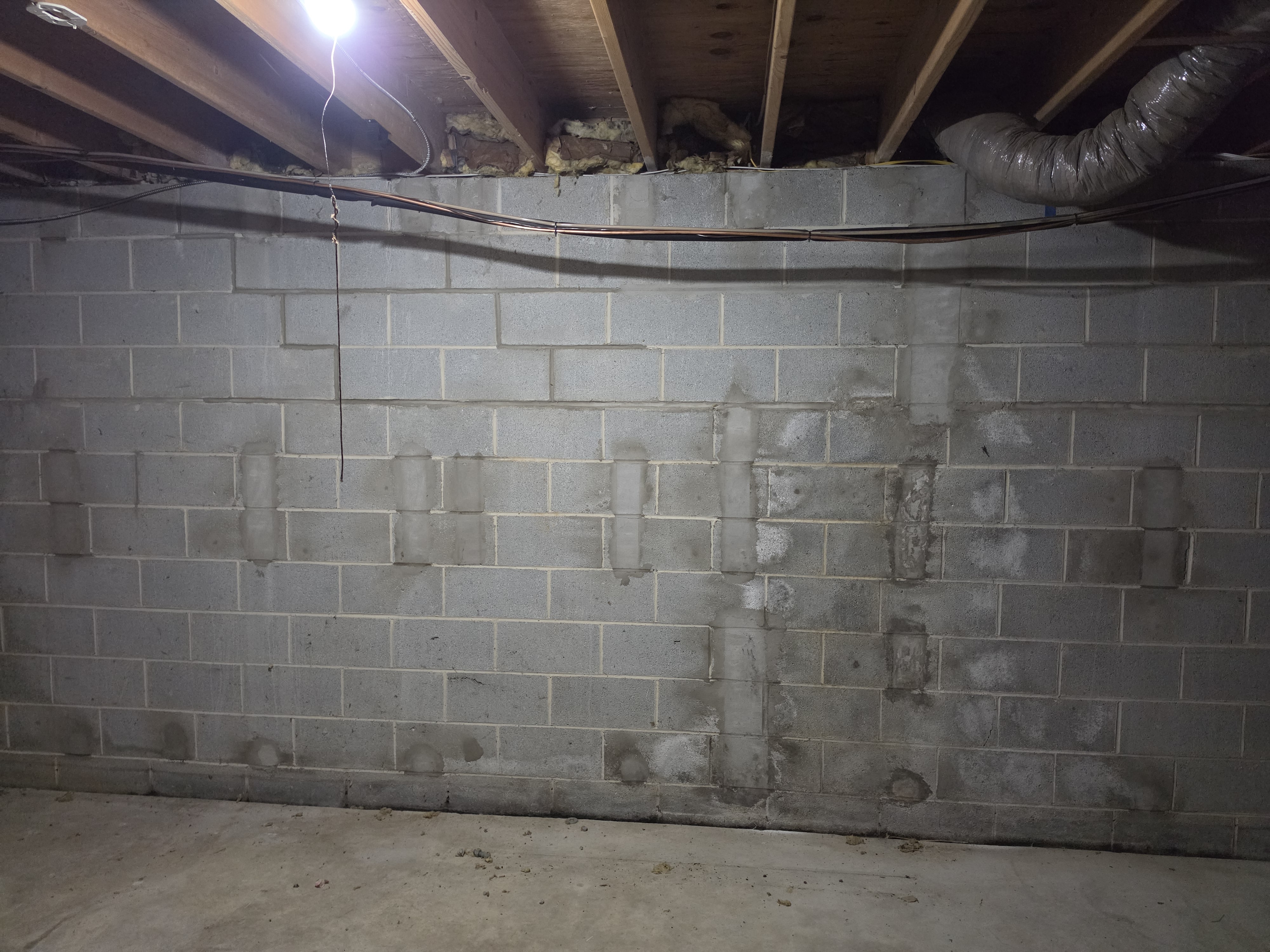
Foundation walls occasionally reveal signs of past movement and repair, and understanding these clues can help homeowners feel confident about the structural integrity of their home. During a recent inspection, a concrete masonry unit (CMU) foundation wall displayed several vertical mortar patches and a minor step crack — features that often prompt questions from buyers. Here’s what these repairs typically indicate and why they are usually a positive sign.What Was ObservedThe foundation wall exhibited the following characteristics:Minor Step Crack: A step crack was visible along the mortar joints in the upper courses of the CMU wall, with approximately 2–3 mm of displacement. This type of cracking is commonly associated with lateral soil pressure or minor settlement, often occurring shortly after construction when backfill soil is placed against the foundation.Vertical Mortar Patches: Several neatly finished vertical sections had been cut into the wall and later filled with mortar. These repairs were … Continued

Read More

Bellies in Furnace Intake and Exhaust Pipes

November 1, 2026 | Home Inspections

A high-efficiency furnace breathes through two plastic pipes, and both must slope continuously so water drains by gravity. When a pipe dips and rises again, it forms a low spot called a belly, and that belly fills with water.How these pipes should runA high-efficiency (condensing) gas furnace pulls combustion air in through one PVC pipe and pushes exhaust out through another. These furnaces extract so much heat from the exhaust that the water vapor in it condenses into liquid inside the pipe. That condensate is mildly acidic.For this reason, the pipes must slope continuously, with no low spots. Depending on the manufacturer’s instructions, the slope runs either toward the exterior or back to the furnace, where the condensate trap and drain line carry the water away. A common requirement is at least 1/4 inch of fall per foot of pipe, with hangers spaced close enough to keep the pipe from … Continued

Read More

Don’t Panic If Your House Has Multiwire Branch Circuits

January 17, 2023 | Home Inspections

Understanding Multiwire Branch Circuits in Home Electrical SystemsMultiwire branch circuits are an uncommon but intriguing wiring technique in home electrical systems. To the untrained eye, a panel wired with this technique may look typical, but a knowledgeable inspector should be able to spot and explain the key differences.Setting the Stage: Key Electrical ConceptsBefore diving into multiwire branch circuits, let’s review some basics:Conductor, Wire, and CableConductor: The metal (usually copper or aluminum) that carries electricity.Wire: A conductor that may be bare or covered with a plastic insulator.Cable: Two or more wires bundled together in a protective sheathing or jacket.In most homes, electrical systems use single-strand insulated copper wires bundled into 2-, 3-, or 4-wire cables. For this discussion, we’ll focus on the use of 3-wire cables.Typical Uses of 3-Wire CablesThree-wire cables are most commonly used in the following scenarios:1. 240-Volt OutletsFor appliances like stoves or dryers.The two hot wires connect to … Continued

Read More

Two Ways To Fix 2-Prong Outlets

April 13, 2020 | Home Inspections

Ungrounded Outlets: A Common Issue in Mid-Century HomesHomes built before the 1960s typically featured ungrounded (2-prong) electrical receptacles, which were standard at the time. While this setup sufficed for older appliances, it poses inconveniences and potential safety concerns for modern usage.Open Ground Condition: What It MeansTo accommodate today’s 3-prong plugs, homeowners often replace 2-prong receptacles with 3-prong ones without addressing the absence of a grounding conductor, resulting in an “Open Ground” condition. This issue is easily detected using an outlet tester:Options for Fixing Open Ground ConditionsReplacing a 2-prong outlet with a 3-prong receptacle is permissible, provided the circuit is protected by a Ground Fault Circuit Interrupter (GFCI). GFCI devices prevent electrical shock by cutting power during faults, even without a grounding conductor. There are two ways to achieve this:GFCI Circuit Breaker: Installed in the main panel, this protects the entire branch circuit.GFCI Receptacle Device: Installed at an outlet, it protects … Continued

Read More

Environmental Services to Ensure the Safety of Your New Home

June 4, 2019 | Buyer Inspections

If you’re in the market to purchase a home, you know you’ll need a professional home inspection before the deal is done. However, sometimes a basic inspection isn’t enough. It’s a good idea to check into the extra inspections available to you. Many future homeowners don’t realize how many environmental dangers are lurking in homes and could pose a serious health risk. Fortunately, our team at Chester County Home Inspections offers a variety of environmental services so you can have peace of mind in your new Chester Springs, PA, home.

Read More

Protect Your Home with an EIFS or Stucco Inspection

April 17, 2019 | Buyer Inspections

For most, building a home is part of the American Dream. What could be better than choosing a layout, color scheme, and add-on features to suit your specific needs? But for many Pennsylvania homeowners, building their dream house did not turn out the way they had planned. According to an article in The Inquirer published in November, Pennsylvania is in the middle of a water damage epidemic that is affecting suburban homes, starter homes, and even luxury homes. Our team at Chester County Home Inspections is here to help. We’ve put together a few reasons why you should consider getting your home inspected so you are able to protect your investment down the road.

Read More